
Has your data been leaked yet? What is it used for? And how to protect yourself.
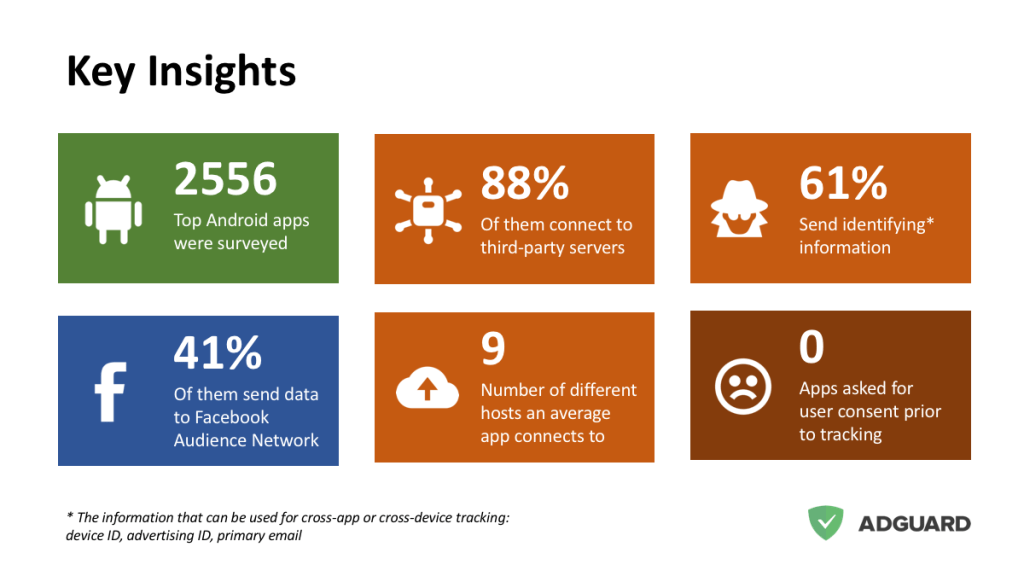
In a data-driven age where businesses consider data as an important part of their business strategy, it is hard not to wonder why do they need it and how can you protect yourself from their prying eyes. For instance, the infamous data breach scandal of Facebook and Cambridge Analytica in 2018 left many social networks to hurriedly update their privacy policies and many users shied away from social media. This poses a question:’ What does the business do with your data, is your data private, and what can you do to protect yourself?’
First, let do a small test, to see whether or not your data have ever been leaked and floating around the internet: https://haveibeenpwned.com/
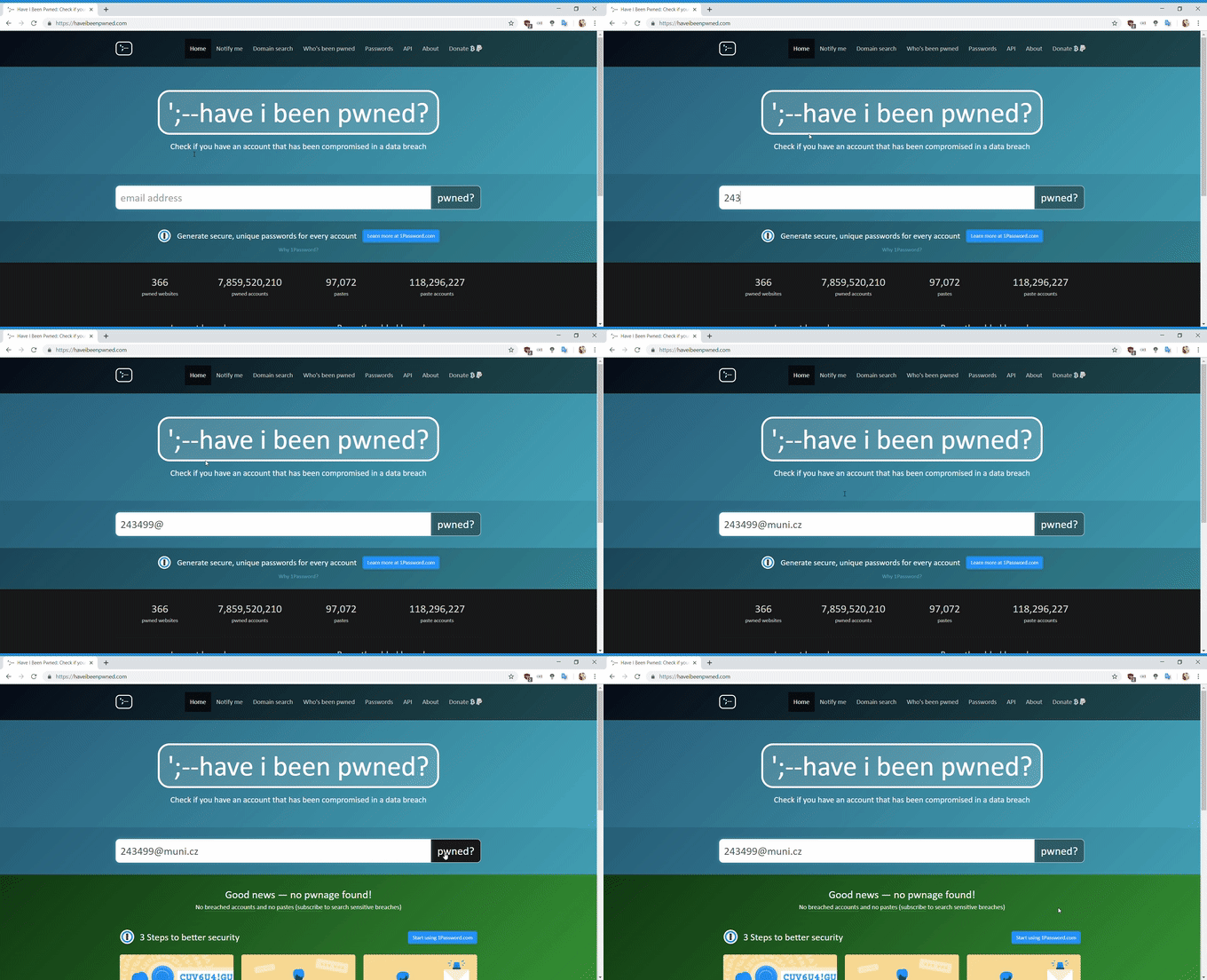
It would be very impressive if the answer is no, then you have done a great job! However, for the rest of us, that is not the case.
We are living in a digital-dominating world. Business is digitally transformed or digitally based, your personal data become a high-value commodity. Social media platforms, such as Facebook, has always been collecting our data, that we have known. It has been happening for ages. What you do, what you watch, what you like and engage with are user behaviour patterns that are crucial information for advertising and even pushing political agenda. Facebook, Twitter, Google, Snapchat, Amazon, and all of them have access to your data, that is for sure, but what they are doing with those data and should a breach happen, who is to blame?
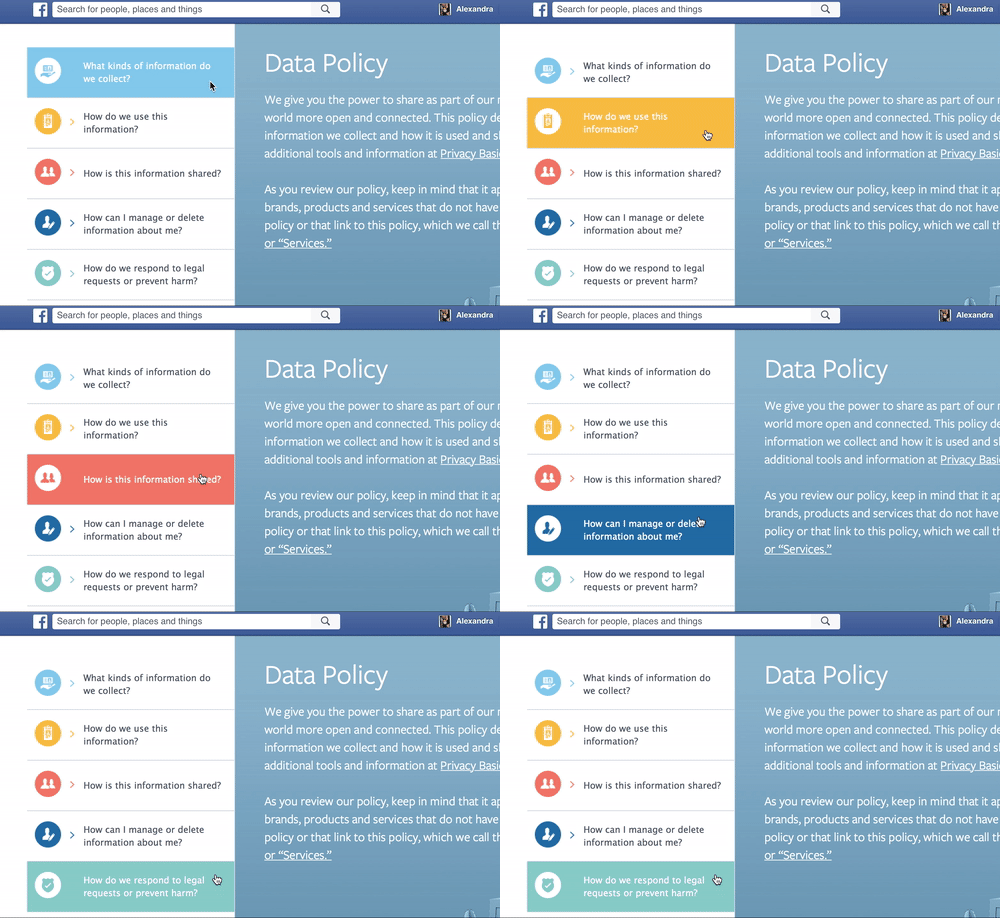
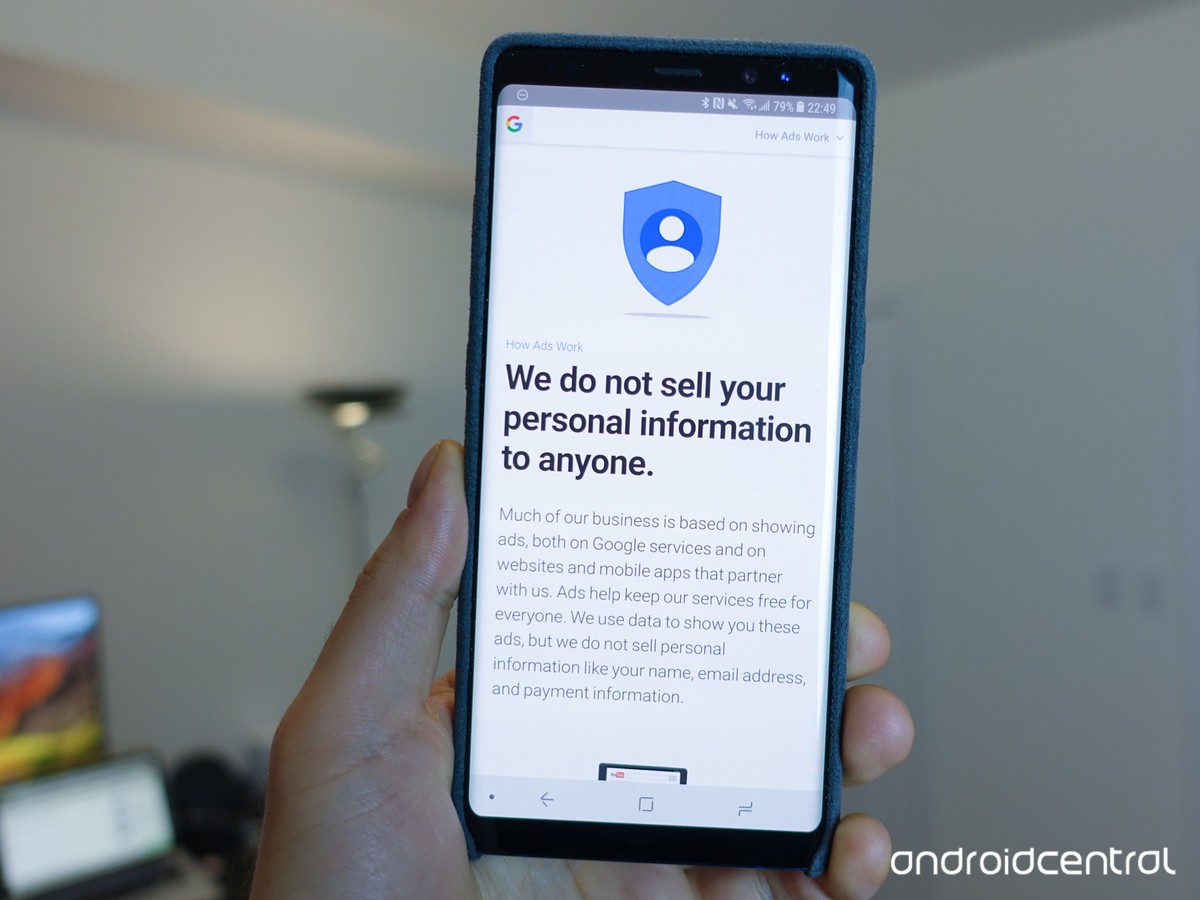
Then it comes to the question:’ What can you do to protect your privacy?’. We Are Social reports that data privacy is the top concern of all social media users, yet only two-third actually take action. While some countries have regulations, some have somewhat of regulation or nothing at all. The most developed one being the General Data Protection Regulation (GDPR) from the EU, which is a much-needed step in the right direction. The US also has a law to protect consumer privacy but it still has a long way to go. Other countries might see themselves unprotected by the government as it is less of an urging problem in their countries, that leaves the responsibility in each individual’s hands. Do not give out your real personal info too easy, do not do silly quizzes, do not use unsecured websites and regularly do a privacy checkup and password management.
 Tuyen's Digital Marketing Blog
Wow it’s really interesting to see how easy it is to gain access or give away my private data on social media with my own consent. I never realised how my own actions could lead to the collection of my data and how participating in certain online aspects such as quizzes and going on to unsecured website could be so significant and will now make sure to check my own actions. Thanks
Jade – https://jadesdigitalblog.wordpress.com/2020/10/03/one-smart-cookie/
LikeLiked by 1 person
Agreed, currently not many people are aware on their private data on these unsecured websites. At the end of the day it comes down to how concerned you are about your information. Thanks for the comment!
LikeLike
Awesome work here, Tuyen – Data privacy can be exploited on many fronts on social media and you raise some good red flags to avoid them. I know I do my best to disdain from these unsecured websites, links and quizzes with my antivirus but as you say, this area is routinely overlooked even though it poses severe repercussions. Well done!
LikeLiked by 1 person
Well said Daniel, I completely agree with you. It becomes a bit surreal at times when I see ads for products that I have mentioned briefly the day before. At the end of the day it comes down to how concerned you are about your information.
LikeLike
What a great post! data privacy had been a big issues for years and it’s seem very hard to fix. It’s so scary nowadays with the growing of social media and my own action can leak my data out to other parties especially when people are on many platforms not just one, the privacy info is even harder to keep. Action need to be more careful!
https://khanhng239.wixsite.com/digitalmarketingblog/post/is-sharing-always-caring
LikeLiked by 1 person
I totally agree Khanh! Exactly right. People that use social media platforms need to be informed about the potential of risks, especially in a society where technology has become such a prevalent aspect of our everyday lives.
LikeLike
Awesome post! Was great that you included a small test to see whether or not personal data have ever been leaked. I’ll be completing that asap! So scary to think my personal data could be out there!
LikeLiked by 1 person
Yes i completely agree Eliza. At the end of the day it comes down to how concerned you are about your information – if you want ease of purchase then some may see personalisation, albeit overreaching at times, a positive. Thanks for the comment, Cheers!
LikeLike
Great work, Tuyen! Our searching data had been obtained and sent to Facebook, Google and they try display relevant ads. I’ve tried using Incognito Window to hide my searching data but I can’t get away from them as well. I feel scary like they are controlling the world.
LikeLiked by 1 person
I totally agreed with you, Cris. At the end of the day it comes down to how concerned you are about your information. Thanks for the comment!
LikeLike